It seems appropriate when we’ve been marinating in fraught and difficult times to turn to a tale about a delightfully good man — particularly as we near St. Patrick’s Day.
Well, I found such a tale. To bring it to life I’ve given it the face of a departed friend, an irrepressibly good and generous man: Tucker McHugh.

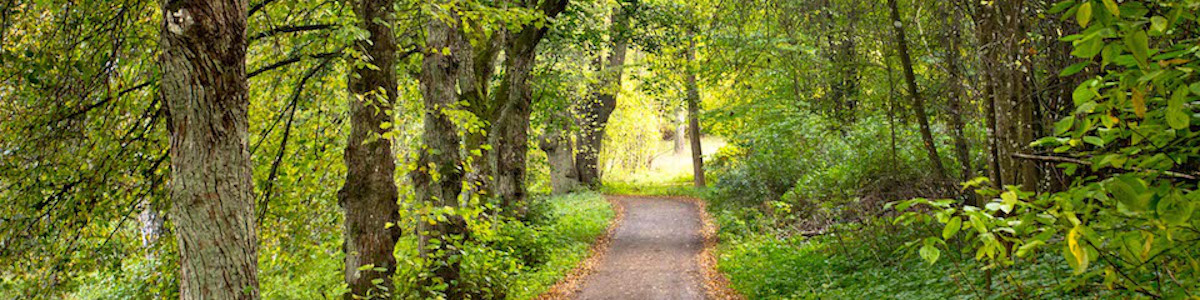
Once upon a time in Ireland, there was a clever farmer named Tucker who lived near a dense, mystical forest. One day, while walking through the woods, Tucker stumbled upon a small, irritable leprechaun busily polishing his tiny pot of gold.
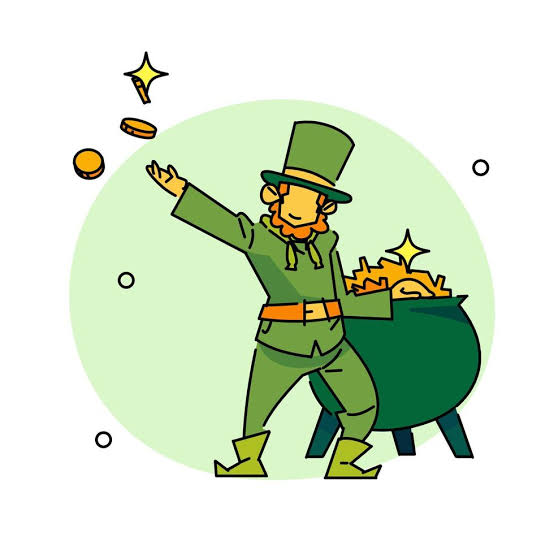
The leprechaun, noticing Tucker, immediately began to boast about his treasure. “This gold is all mine!” he declared, “and if anyone tries to take it from me, they’ll have to face the wrath of the fairies!”
Tucker, not one to back down from a challenge, replied, “I don’t want to take your gold. But I’d like to make a deal. If I can guess where you hide it, you must give it to me.”
The leprechaun, amused by Tucker’s audacity, agreed, thinking that no human could ever guess the secret hiding place.
“Very well,” the leprechaun said, “but you have only one chance!”

Tucker thought carefully.
He knew leprechauns were tricky and loved to hide their treasures in the most unlikely places.
After a moment’s contemplation, he said, “I believe you’ve hidden your gold in the hollow of the old oak tree by the edge of the forest.”
The leprechaun’s eyes widened in surprise. “How did you know?” he asked, scrambling to cover the pot of gold with his tiny hands.
Tucker smiled. “I’ve seen many treasure hunters in my time. Leprechauns are known for their fondness for old, ancient trees.”
With a resigned sigh, the leprechaun handed over the pot of gold, begrudgingly admitting that Tucker had indeed guessed correctly.
But before Tucker could take it away, the leprechaun made him promise to use the gold wisely and to always remember that the true value of a treasure lies not in the wealth it brings, but in the joy and prosperity it can create for others.
Tucker honored his promise.
He used the gold to help his community, building a school and a well, and sharing with those in need.
The leprechaun, watching from afar, was pleased. He continued to bless Tucker and his village with good fortune.
And so, Tucker’s wisdom and generosity became legendary.
The tale of the leprechaun’s gold was told for generations as a reminder of the true value of kindness and community.
And that’s the story of Tucker and the leprechaun’s gold.

But the story does not end there, for the leprechaun’s greatest trick was yet to come.
Years passed. Tucker grew old, and the village prospered.
- The school he built stood strong.
- The well he dug never ran dry.
- Children who learned to read in that school became teachers.
- Families planted gardens that fed the village for generations.
One evening, as Tucker sat beneath the old oak tree—the very tree where the gold had been hidden—a familiar shimmer appeared in the twilight.

The leprechaun stepped out from behind the roots, smaller than Tucker remembered, but with the same knowing grin.
“You kept your promise,” the leprechaun said.
“I did,” Tucker replied.
“And now you are old, and poor, and sitting under a tree with nothing to show for all that gold.”
Tucker laughed softly. “Look around you.
- The school.
- The well.
- The children playing.
- The gardens growing.
You think I have nothing to show?”

The leprechaun sat beside him. “I gave you a test that day. Most humans fail it.
- They take the gold,
- They hoard it,
- They build walls,
- They die alone.
— surrounded by things they never used. And you?
- You turned gold into goodness.
- Wealth into welfare.
- Treasure into community.”
The leprechaun reached into his pocket and pulled out something small and gleaming.
Not a pot of gold.
Something better. “A seed,” he said.

“From the first tree that ever grew in Ireland. Plant it anywhere, and it will grow into a tree that bears
- fruit enough to feed a village,
- shade enough to cool a field, and
- wood enough to build a home.”
Tucker took it gently. “Why give this to me?”
“Because you learned the lesson twice.
- First, when you chose to share the gold.
- Second, when you sat here poor and happy knowing exactly what your wealth had become.”
The leprechaun stood, brushed off his tiny coat, and began to fade into the evening mist.
“Remember, Tucker,” his voice echoed.
“A man who measures his wealth by what he keeps dies rich and empty. A man who measures his wealth by what he gives away lives forever in the lives he touched.”
Tucker planted the seed the next morning. He did not live to see the tree fully grown but his grandchildren and their grandchildren played in its shade.
And Tucker’s goodness lives on in Eternity.
Here’s remembering all the Tuckers of this world.

“Dia dhui”…
Pat
🍀
Fifty years ago, when I was still a drinking man, I would celebrate St. Patrick’s Day at my favorite pub in Chicago, The Emerald Isle. I remember celebrating St. Patrick’s Day in 1976 with my pal Geoff Nixon when the band played my favorite Irish ballad, Whiskey in the Jar.
Here Mark Peason and his Brothers Four mates bring this great ballad to life.