If ever the world needed an understanding of leadership beyond the one embodied by many contemporary leaders perhaps we need look no farther than the teachings of the ancient Chinese philosopher, Lao Tzu.
The author of the Tao Te Ching.
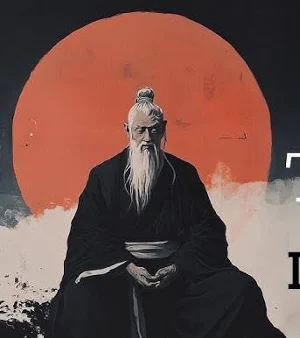
Lao Tzu by many accounts was a contemporary of Confucius. There’s one record of a young Confucius traveling to the capital of Luoyang to consult with Lao Tzu, who, at the time was working as the royal archivist for the Zhou court.
But eventually Lao Tsu became disaffected with the moral decay of his society, resigned his position and fled west on a water buffalo.
Who wouldn’t want to hitch a ride on THAT buffalo?
At a mountain pass, a guard asked him to sit a while and record his wisdom, which then resulted in his composition of the Tao Te Ching.
After writing it, he vanished into the desert.
But what a treasure trove of wisdom he left behind.
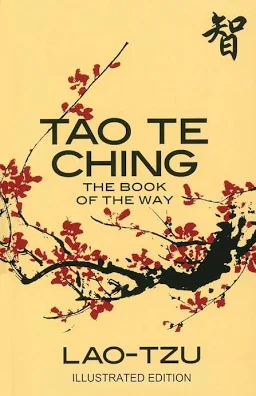
In a nutshell the Tao Te Ching describes the “Way.”
- Stop trying to control everything.
- Move with life, not against it.
In the Taoist tradition, natural action is known as Wu Wei:
Flowing with the current, not fighting it.
It is the art of effortless action—doing only what is necessary without
- force,
- ego, or
- strain.
Like water carving a canyon, it achieves the most powerful results by following the path of least resistance and remaining perfectly aligned with reality as it is, rather than how we wish it to be.

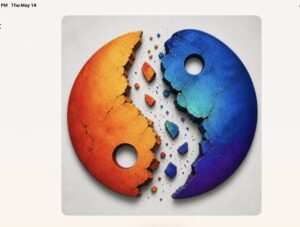
Tao Te Ching emphasizes the balance of opposites:
Yin and Yang
Compare that with how we experience contemporary life where what’s celebrated is
- ambition
- growth
- ego
- moral certainty
The Tao’s teaching on leadership is a shocking inversion of our own power dynamics.
The Tao teaches a leader to choose humility over —
- force and control
- relentless pursuit of power
- consumption
- certainty
~ lest you exhaust yourself and fracture your union with the natural order.
Here’s the story of one man who lived the Way of the Tao:
The story of General Liang
In a drought-cracked corner of ancient China, General Liang watched his village—and then his entire province—bled dry by a boastful warlord. Every loud, gold-braided hero who challenged the warlord ended up in a ditch. Liang’s own army had been disbanded for months. His officers had abandoned him for richer masters. He owned no grand fortress, no gleaming cavalry, no title the warlord would fear.
He started walking through the province.
He had no army, but a general does not stop being a general.
He shared his last bowl of millet with starving strangers—strategically, to bind their loyalty. He mended fences for the elderly—tactically, to build eyes and ears across every village.
He never demanded respect, never called anyone weak, never needed a crowd to cheer him. His soldiers had loved him not for his cruelty, but because he ate the same rancid porridge they did.
While the self-proclaimed “strongmen” tried to smash the warlord’s front gate, General Liang slipped through the back —
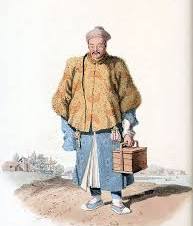
—not as a warrior, but as a servant.
- He swept floors,
- He emptied chamber pots,
- He took abuse in silence,
his back straight, his hands calloused from decades of honest command. His quiet integrity made him invisible.
But invisibility, Liang knew, is the first principle of war.
One night, the warlord noticed the strange calm of this middle-aged drudge — the way he moved without groveling — the way he met a tyrant’s eyes without flinching.
Amused, the warlord offered him gold, women, and a place at his right hand. Liang set down the broom. He did not bow. He simply said:
“Keep your spoils. I only want my neighbors to sleep without fear.”
That unpolished, egoless truth struck down the warlord and those around him.
His grip on power crumbled overnight.
His own guards, who had watched Liang empty their chamber pots without a whisper of complaint, refused to fight for a master who could be shamed by a servant.
The valley healed, not through battle but through a general who never needed to be the hero.
A true general doesn’t need an army to win. He only needs to be stronger than the man who demands — a golden toilet.
Just a thought…
Pat