After my recent post on toxic masculinity I found I was drained to the bone. I kept asking myself — how in the name of God will we ever survive ourselves?
And then, as so often is the case, I remembered something Abraham Lincoln once said: “The mystic chords of memory… will yet swell…when again touched, as surely they will be, by the better angels of our nature.”
Yes! Yes!
But how do we find these better angels? Maybe one way is compassion. Two stories:
💐
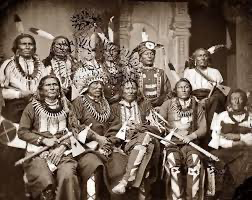
In the late 1830s, members of the Choctaw Nation were forced to march from their homeland near Charleston, Tennessee, westward to a reservation near Tahlequah, Oklahoma—a journey of some 1,200 miles.
The journey became known as the Trail of Tears and would end up killing thousands.
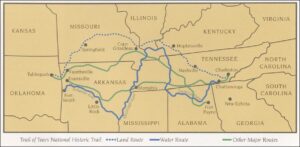
The reservation became, for the Choctaw people, a place of impoverished squalor and a time of unimaginable loss.
And yet…
When the news broke in the reservation in 1847 that a famine in far off Ireland was killing thousands of men, women and children, the tribe, remembering their own suffering, rallied to the cause of the famine-stricken Irish. They rounded up their savings and sent it to the Irish Famine Relief Fund — a total of $170.00.
Newspapers at the time expressed astonishment that a people still so enfeebled from their tragedy would compassionately reach out to help strangers an ocean away.
As a result of their gift many more Americans donated to the Fund.
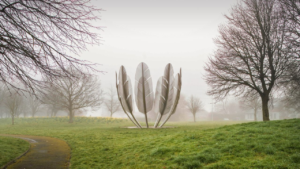
Over the decades, the story became a bright spot in Ireland’s collective memory of a very dark time—so much so that a sculpture was commissioned in honor of the Choctaw people and currently resides in a park in the city of Cork.
— Kindred Spirits
Indeed, there exists within us all a wellspring of compassion. We sometimes need to acknowledge the pain of others to tap into it.
What do they say — it takes one to know one.
Which reminds me of my own story of a kindred spirit.
💐
In my early days of sobriety, I often attended AA meetings near Seattle’s waterfront. To get there, I passed a homeless encampment underneath the old viaduct.

It was there I often encountered a homeless guy who took to waving at passersby. I judged him more in need of my pity than my respect.
Then something happened to change all that.
I came upon a time of rough waters. I was in trouble — deep trouble.
So on one particular sleepless night, I made my way down to a midnight AA meeting not far from the homeless encampment.
I walked in at half past midnight, carrying my life as an anchor behind me.

The room was full — every seat was occupied. You would have thought it was noon.
When I saw who was chairing, I was stunned.
It was the very same guy I’d seen on countless occasions under the viaduct. Our eyes met, and he offered me a congenial nod.
His lead was one for the ages.
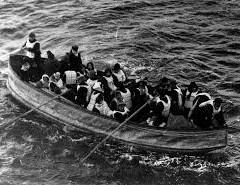
He told the story of crabbing on the frigid Bering Sea when his boat capsized. The crew climbed into a lifeboat and desperately struggled to keep the boat afloat in gale-force winds.
They each had an oar, but maneuvering was difficult and dangerous.
Then it happened.
The crew member sitting next to him was suddenly pitched overboard.
He dropped his oar and flung himself to the side of the boat, reached out and grabbed the back of his shipmate’s collar.
At which point the other men set up a chain — each one holding onto another.
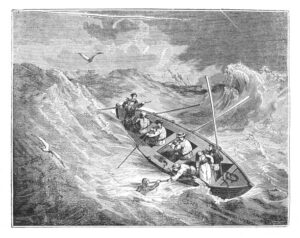
They were able to both steady the boat while also keeping each other from being thrown overboard.
He said it felt like they’d been out in the frigid sea for hours when, finally, they were able to pull the man back onto the boat.
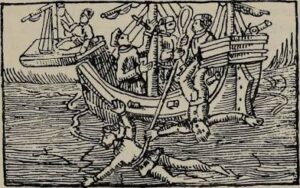
As he told his story, I couldn’t help but feel myself being pulled back into my own boat.
When I left that meeting, I knew for that day I had been saved. All I could think of was the gentle compassion that is drawn from those who have been broken.
We need our chain of support now more than ever. Maybe we can each find a way to touch into our compassion today.
Just a thought…
Pat
—
Now, here’s music from Mark Pearson to shed more light on this thought.